
Salon Management Software: Features Beyond Appointment Booking
Running a salon involves much more than managing appointments. From maintaining product inventory and managing employees to building customer relationships and tracking revenue, salon owners handle multiple responsibilities every day. Managing these tasks manually can consume valuable time and make it harder to grow a business.
Salon Management Software helps simplify daily operations by bringing essential business activities into one system. While online appointment booking is an important feature, modern salon software can also support inventory management, customer relationship management, staff scheduling, sales tracking, and business reporting.
Let's explore what salon management software can do beyond appointment booking and how it can help your salon operate more efficiently.
1. Simplify Appointment Scheduling and Reduce No-Shows
Appointment scheduling is one of the primary functions of salon software. It allows customers to book services, select their preferred stylists, and choose convenient time slots without relying entirely on phone calls or manual registers.
Automated appointment reminders can help reduce missed appointments, while a centralized calendar makes it easier to manage staff availability and daily bookings.
With organized scheduling, salon owners can minimize booking conflicts, manage busy periods, and provide a smoother customer experience.
2. Manage Salon Inventory More Efficiently
Keeping track of beauty products, haircare supplies, skincare items, and other salon essentials is important for uninterrupted operations. Poor inventory management can lead to product shortages, unnecessary purchases, and avoidable expenses.
Salon Management Software can help businesses monitor stock levels, record product usage, and identify items that need replenishment. Depending on the system, salon owners may also be able to manage supplier details and review inventory reports.
For example, if a salon frequently uses a particular hair treatment product, inventory tracking can help the owner identify when stock is running low and plan purchases accordingly.
Better inventory control helps reduce waste, maintain product availability, and manage operating costs.
3. Build Stronger Customer Relationships with CRM
Customer relationships play an important role in salon growth. Remembering each client's preferences, service history, and previous visits can be difficult when records are scattered across notebooks or spreadsheets.
Salon CRM software helps organize customer information in one place. Depending on the available features, it may include contact details, appointment history, preferred services, and customer notes.
This information allows salon professionals to deliver more personalized experiences. For instance, a salon can use customer records to understand returning clients' preferences, plan birthday offers, or create relevant promotional campaigns.
A well-organized customer management process can encourage repeat visits, strengthen client relationships, and support long-term customer retention.
4. Improve Employee Scheduling and Staff Management
Managing salon employees involves coordinating shifts, assigning services, monitoring availability, and maintaining consistent service quality. Without a clear system, scheduling conflicts and uneven workloads can affect daily operations.
Salon Management Software can help owners organize staff schedules, assign appointments, and monitor employee availability. Some systems also provide sales reports or performance insights to help managers understand business activity.
For example, reviewing appointment demand during busy hours can help salon owners schedule enough staff to serve customers efficiently.
Better staff coordination helps reduce scheduling confusion, improve workflow, and create a more organized working environment.
5. Track Sales, Payments, and Business Performance
Understanding how a salon performs financially is essential for making informed business decisions. Manually reviewing bills, sales records, and daily transactions can be time-consuming.
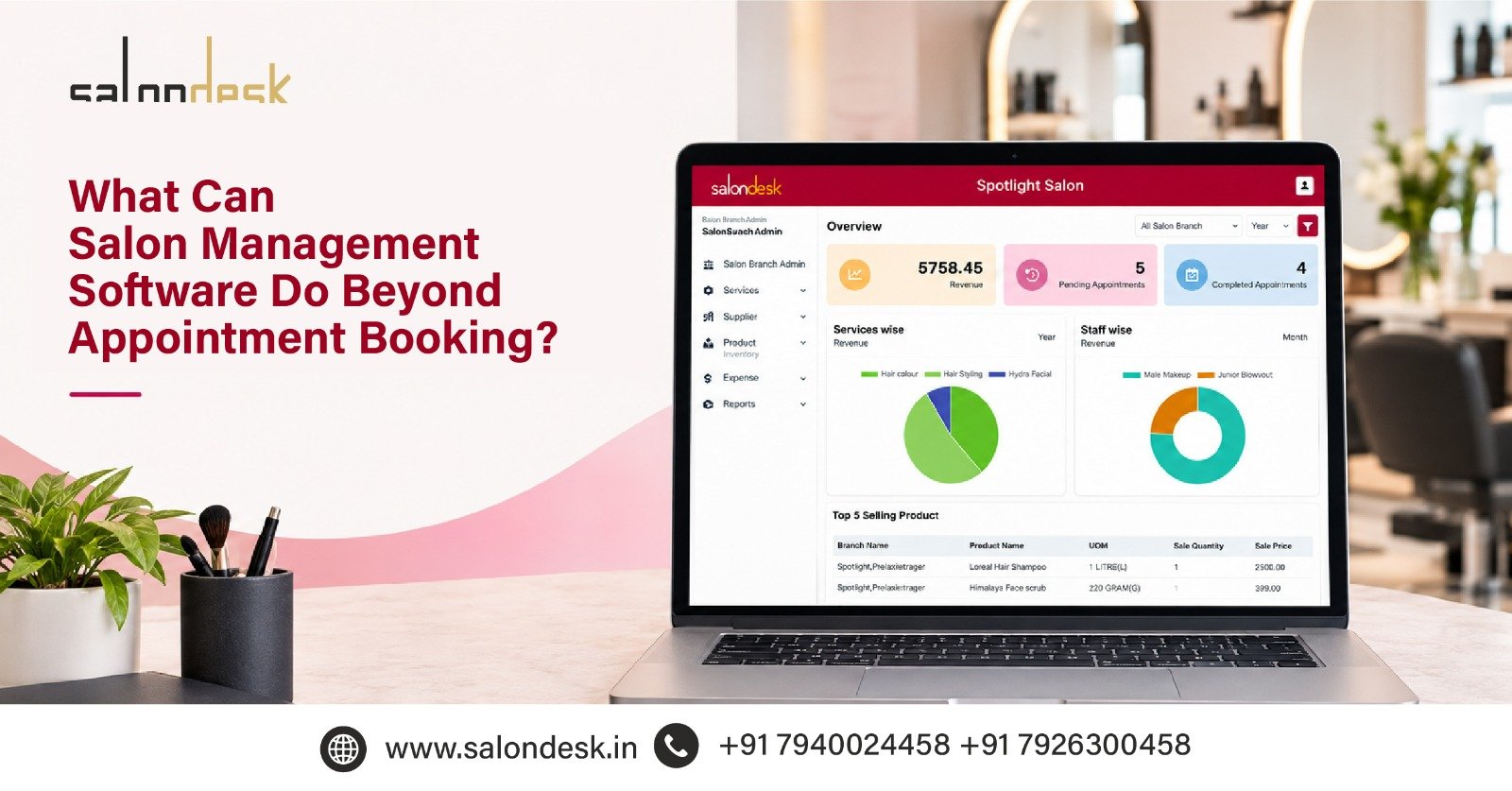
A salon management system may provide billing, payment recording, sales tracking, and reporting features that help owners review business performance.
These reports can help answer important questions:
- Which salon services generate the most sales?
- How much revenue does the salon generate over a specific period?
- Which products are selling consistently?
- Are customer visits increasing or decreasing?
- Which areas may need operational improvement?
Access to organized business data helps salon owners identify trends, evaluate services, and plan future growth more effectively.
6. Support Marketing and Customer Retention
Attracting new customers is important, but encouraging existing customers to return can also contribute to sustainable salon growth.
Depending on the software, salon marketing tools may support customer segmentation, promotional offers, loyalty programs, and follow-up communication.
For example, a salon can create offers for customers who have not visited recently or promote relevant services to a particular customer group.
When marketing activities are based on accurate customer information and used appropriately, they can help salons communicate more effectively and build lasting relationships.
7. Centralize Daily Salon Operations
Using separate tools for appointments, customer records, inventory, billing, and employee schedules can create unnecessary complexity. Information may become difficult to track, and staff may spend extra time switching between systems.
A salon management system can bring multiple operational activities together in one platform. The exact capabilities depend on the software selected, but centralization can make daily tasks easier to organize and monitor.
Instead of relying on multiple registers or spreadsheets, salon owners can use a more structured workflow to manage essential business information.
Solutions like SalonDesk can help salon businesses explore a more organized approach to managing their daily operations, depending on the features available and their specific business requirements.
Benefits of Salon Management Software for Small and Growing Salons
Salon software is not limited to large beauty businesses. Small salons, independent professionals, and growing salon chains can also benefit from organized digital processes.
Key benefits include:
- Time savings: Reduce repetitive administrative work through automation.
- Better organization: Keep appointments, customer details, and business records structured.
- Improved customer experience: Make bookings and service management more convenient.
- Inventory control: Monitor product availability and identify replenishment needs.
- Team coordination: Organize staff schedules and appointment assignments.
- Informed decisions: Use available reports to understand sales and business activity.
- Growth support: Build processes that can adapt as the salon expands.
The results depend on the features available, how the software is implemented, and how consistently the team uses it.
How to Choose the Right Salon Management Software
Before investing in salon software, identify the areas of your business that need the most improvement. A salon that struggles with missed appointments may prioritize reminders and online booking, while a larger business may need stronger inventory, employee, or reporting capabilities.
Consider these factors when evaluating different solutions:
- Essential features: Check whether the system supports your appointment, customer, inventory, and billing requirements.
- Ease of use: Choose software that your staff can learn and use comfortably.
- Pricing: Compare subscription costs, available plans, and any additional charges.
- Scalability: Consider whether the software can support your future business needs.
- Customer support: Look for accessible assistance and useful onboarding resources.
- Data security: Review how customer information is stored, accessed, and protected.
- Demo availability: Test the system before committing to a long-term plan.
Choosing software based on your actual business requirements can help you avoid paying for unnecessary features while ensuring that important operational needs are covered.
Common Mistakes to Avoid When Implementing Salon Software
Even useful software requires proper implementation. Salon owners can improve adoption by avoiding a few common mistakes.
- Skipping staff training: Make sure employees understand how to manage bookings, update records, and use the relevant features.
- Ignoring data migration: If you are moving from another system, verify that important customer and business records are transferred correctly.
- Choosing based on price alone: Compare usability, features, support, and overall value rather than focusing only on the subscription fee.
- Not reviewing reports: Use available business reports regularly to identify patterns and areas for improvement.
- Overlooking updates and security: Keep the system updated and follow recommended practices for protecting customer information.
A planned implementation helps employees adapt more comfortably and allows the salon to make better use of its software.
Conclusion: Manage Your Salon Beyond Appointment Booking
Successful salon management requires more than a well-organized appointment calendar. Inventory control, customer relationships, employee coordination, sales tracking, and effective business reporting all contribute to smoother daily operations.
Salon Management Software can bring these activities together, helping salon owners reduce manual work, improve organization, and make more informed decisions.
If you want to simplify your salon's daily operations, explore SalonDesk, a salon management solution designed to support more organized salon operations. Evaluate its features to see how they align with your business needs and help you focus on delivering quality services while building lasting customer relationships.
Frequently Asked Questions About Salon Management Software
1. What is salon management software?
Salon Management Software is a digital solution that helps beauty businesses organize appointments, customer records, staff schedules, inventory, billing, and other daily operations. Available features vary by provider.
2. Can salon management software do more than appointment booking?
Yes. Depending on the platform, it can also support inventory tracking, customer relationship management, employee scheduling, billing, sales reporting, and marketing activities.
3. Is salon management software useful for small salons?
Yes. Small salons can use software to organize appointments, maintain customer records, manage daily tasks, and reduce manual administration. The right solution depends on the salon's size, budget, and requirements.
4. How does salon CRM software help improve customer retention?
Salon CRM software organizes customer information, service history, and preferences. These details can help businesses personalize services, plan relevant offers, and maintain better customer relationships.
5. Can salon management software help control inventory costs?
Inventory features can help salon owners monitor stock levels, identify frequently used products, and plan replenishment. This can reduce the risk of shortages and unnecessary stock purchases.
6. What should I look for when choosing a salon management system?
Consider appointment scheduling, customer management, inventory, employee coordination, billing, reporting, pricing, ease of use, customer support, and data security. Prioritize the features that address your salon's actual needs.